
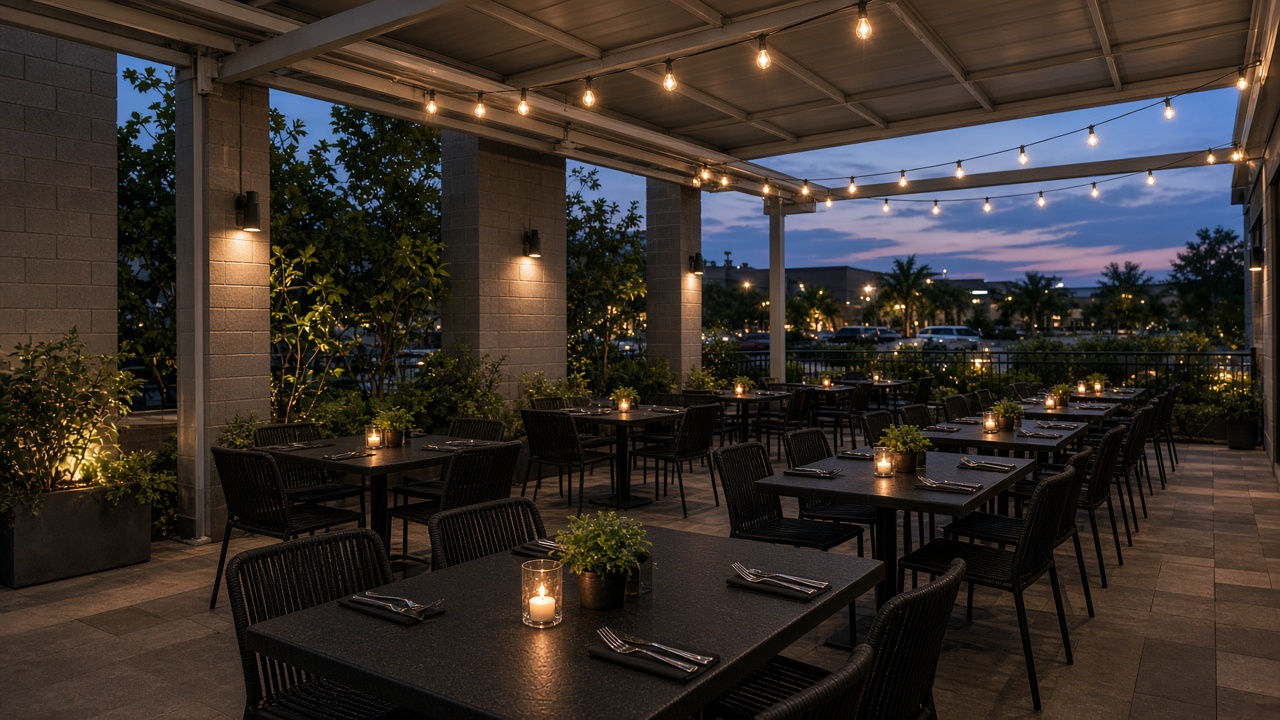
For many Houston restaurants, the patio is some of the most valuable square footage on the property. It is visible from the street, it gives guests a reason to linger, and it can add seating without a building addition. The challenge is Houston weather: strong sun, summer heat and sudden rain can make an open patio unusable for long stretches. A well-planned patio cover makes outdoor seating far more usable across more of the year.
This guide walks restaurant owners and managers through the structure options, the operational details that matter, and how to plan a project with less disruption to service.
Start with how the patio will operate
Before choosing a product, map how the space works on a busy night. Where do guests enter? Where are the server paths to and from the kitchen and bar? Where do tables, host stands and bussing stations sit? A cover should support that flow, with posts placed so they do not block aisles or awkwardly split tables. Our restaurant patio projects are planned around seating, staff circulation and the character of the restaurant, not the other way around.
Structure options for restaurant patios
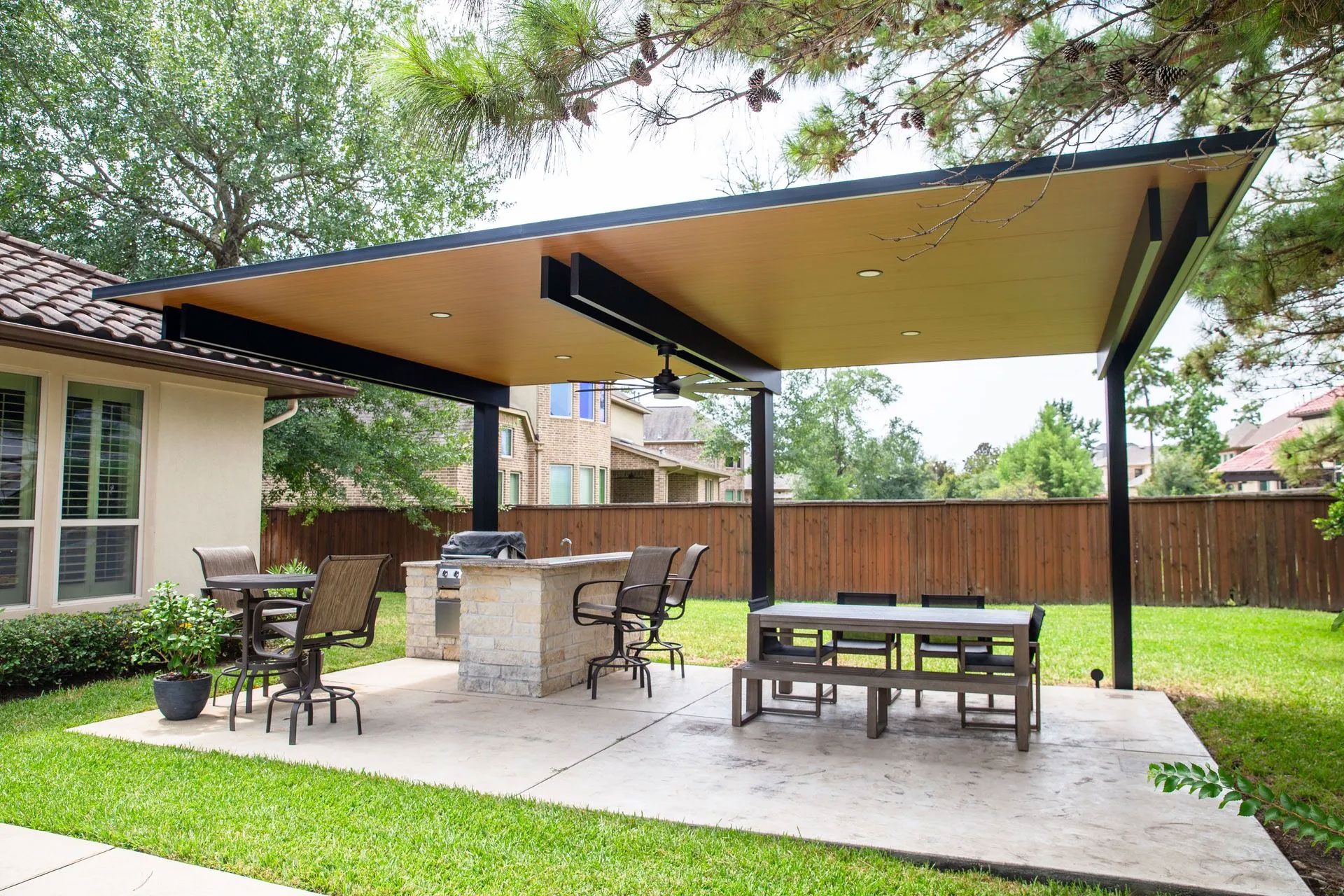
- Insulated patio covers give consistent overhead coverage and keep the space under them cooler than a thin single-layer roof.
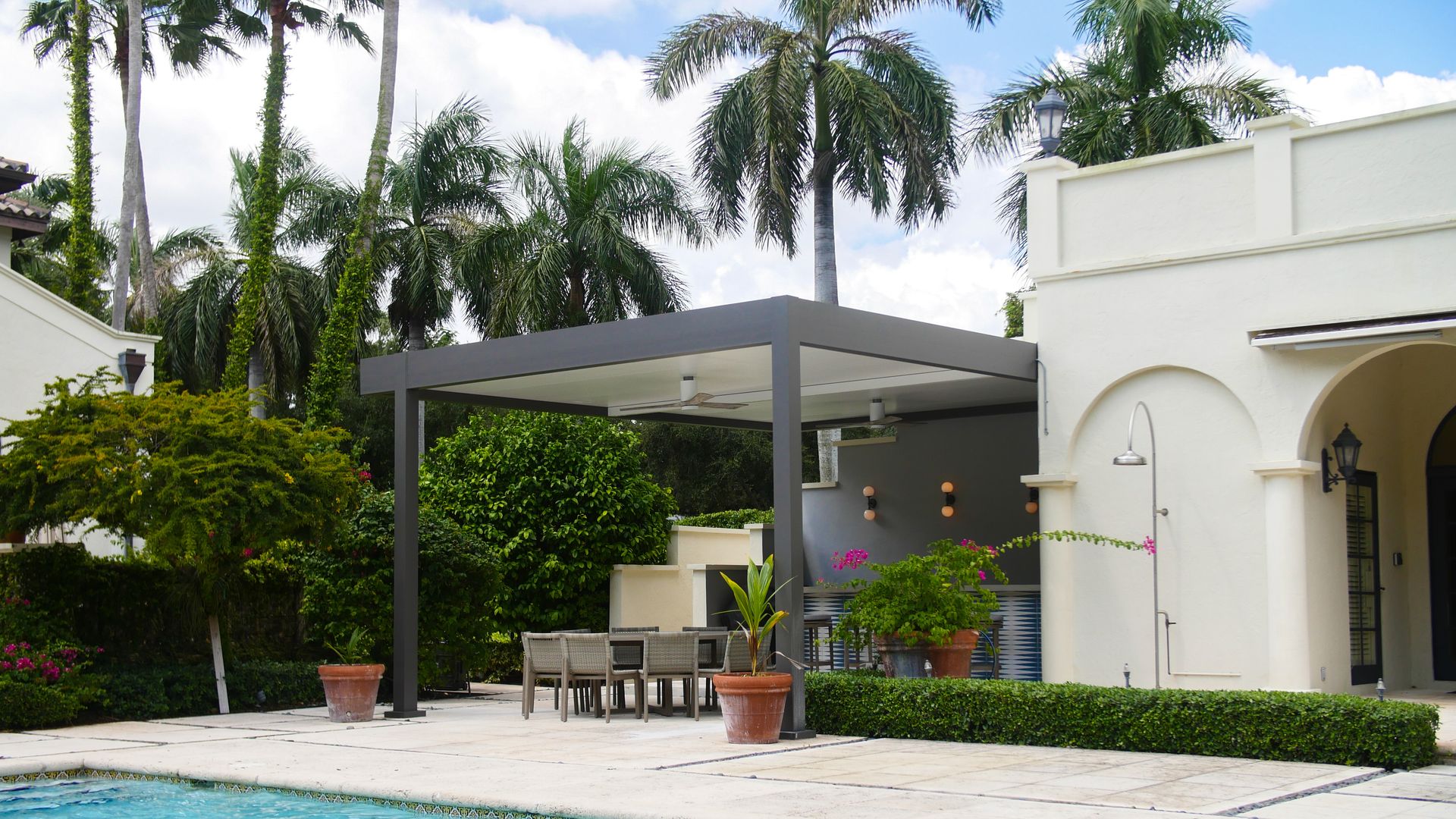
- Louvered pergolas use adjustable louvers, so you can open the roof for evening light or close it for shade and rain.
- Pergolas give filtered shade and a strong visual frame for the dining area.
- Canopies, including aluminum extruded and overhead canopy systems, work well for entries, walkways and service areas.
- Motorized screens and manual screens add side protection from low sun, wind and insects.
- Enclosures create a more protected space for cooler or wetter days.
Fixed roof or adjustable louvers?
A fixed roof provides consistent coverage and is simple to operate: it is always closed, always shading and always shedding rain. Adjustable louvers change how much light and air come through, which is popular for evening service and spring and fall weather. Compare how the patio will actually run day to day, the maintenance each system needs, and the model you are considering. Many restaurants combine a fixed or louvered roof with side screens on the west or south side, where afternoon sun hits hardest.
Design details that matter in service
Lighting, fans, heaters and power should be planned early so wiring can run cleanly through beams and posts instead of being added later. Gutters and downspouts keep runoff away from guests, doors and walkways. Ceiling height affects both the feel of the space and how much shade reaches the tables in late afternoon. If you plan to use patio heaters, follow the heater manufacturer's clearance requirements under any cover.
Brand and atmosphere
A covered patio is part of the dining experience and often the first thing people see from the street. Colors, lighting and screen fabrics can reflect the restaurant's brand. Browse our colors and finishes to see what is available, and look through our restaurant patio gallery for real projects.
Permits, codes and site requirements
Commercial patio structures commonly involve city permits and engineered plans, and some projects need additional review depending on the location and scope. Requirements vary by city and property, so confirm what applies to your site before construction begins. A covered patio also does not by itself guarantee year-round dining or any change in seating capacity rules, so check occupancy requirements for your space too.
Planning around Houston weather
Houston weather shapes almost every outdoor project. Heat and strong sun make shade the top priority. Heavy rain means drainage matters, so water runs away from guests and entrances. Storm season means the structure should be engineered and anchored for wind. Ask how the design handles each of these, and plan installation for a drier stretch when possible.
Frequently asked questions
Can work be scheduled around restaurant hours?
Often, yes. Talk with the team about your service hours so installation can be planned to limit disruption.
Should a restaurant choose a fixed roof or adjustable louvers?
A fixed roof provides consistent overhead coverage, while adjustable louvers let you change light and shade. Compare how the patio operates, maintenance needs and the selected model.
Which option handles rain best?
Fixed insulated covers or closed louvered roofs, combined with side screens, give the most protection from rain.
Do restaurant patio covers need permits?
Commercial structures usually require permits and engineered plans. Requirements depend on the city and the project, so confirm them before building.
Plan your restaurant patio with Kool Covers
Kool Covers is a family-owned company established in 1998, based at 8621 Easthaven Blvd in Houston, building aluminum and steel outdoor structures for Houston homes and businesses, including commercial structures and restaurant patios. Request a free quote or call (713) 893-1915 to talk through your space.